SB 1.2.27
Devanāgarī
रजस्तम:प्रकृतय: समशीला भजन्ति वै । पितृभूतप्रजेशादीन्श्रियैश्वर्यप्रजेप्सव: ॥ २७ ॥
Text
rajas-tamaḥ-prakṛtayaḥ sama-śīlā bhajanti vai pitṛ-bhūta-prajeśādīn śriyaiśvarya-prajepsavaḥ
Synonyms
rajaḥ—the mode of passion;tamaḥ—the mode of ignorance;prakṛtayaḥ—of that mentality;sama-śīlāḥ—of the same categories;bhajanti—do worship;vai—actually;pitṛ—the forefathers;bhūta—other living beings;prajeśa-ādīn—controllers of cosmic administration;śriyā—enrichment;aiśvarya—wealth and power;prajā—progeny;īpsavaḥ—so desiring.
Translation
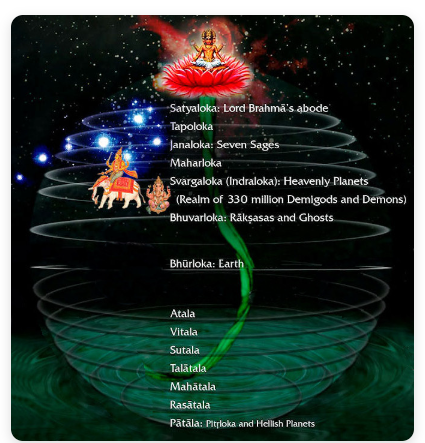
Those who are in the modes of passion and ignorance worship those in the same category — namely the forefathers, other living beings and the demigods who are in charge of cosmic activities — for they are urged by a desire to be materially benefited with women, wealth, power and progeny.
Purport
For material enjoyment there is no need to approach the demigods. The demigods are but servants of the Lord. As such, they are duty-bound to supply necessities of life in the form of water, light, air, etc. One should work hard and worship the Supreme Lord by the fruits of one’s hard labor for existence, and that should be the motto of life. One should be careful to execute occupational service with faith in God in the proper way, and that will lead one gradually on the progressive march back to Godhead.
Lord Śrī Kṛṣṇa, when He was personally present at Vrajadhāma, stopped the worship of the demigod Indra and advised the residents of Vraja to worship by their business and to have faith in God. Worshiping the multidemigods for material gain is practically a perversity of religion. This sort of religious activity has been condemned in the very beginning of the Bhāgavatam as kaitava-dharma. There is only one religion in the world to be followed by one and all, and that is the Bhāgavata-dharma, or the religion which teaches one to worship the Supreme Personality of Godhead and no one else.