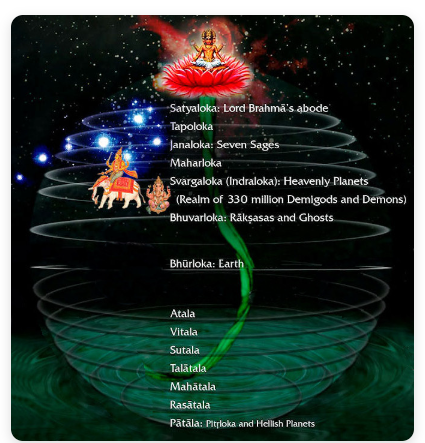
SB 10.68.37
Devanāgarī
यस्याङ्घ्रिपङ्कजरजोऽखिललोकपालै- र्मौल्युत्तमैर्धृतमुपासिततीर्थतीर्थम् । ब्रह्मा भवोऽहमपि यस्य कला: कलाया: श्रीश्चोद्वहेम चिरमस्य नृपासनं क्व ॥ ३७ ॥
Text
yasyāṅghri-paṅkaja-rajo ’khila-loka-pālair mauly-uttamair dhṛtam upāsita-tīrtha-tīrtham brahmā bhavo ’ham api yasya kalāḥ kalāyāḥ śrīś codvahema ciram asya nṛpāsanaṁ kva
Synonyms
yasya—whose;aṅghri—of the feet;paṅkaja—lotuslike;rajaḥ—the dust;akhila—of all;loka—worlds;pālaiḥ—by the rulers;mauli—on their helmets;uttamaiḥ—exalted;dhṛtam—held;upāsita—worshipable;tīrtha—of holy places;tīrtham—the source of holiness;brahmā—Lord Brahmā;bhavaḥ—Lord Śiva;aham—I;api—also;yasya—whose;kalāḥ—portions;kalāyāḥ—of a portion;śrīḥ—the goddess of fortune;ca—also;udvahema—carry carefully;ciram—constantly;asya—His;nṛpa-āsanam—king’s throne;kva—where.
Translation
“The dust of Kṛṣṇa’s lotus feet, which is the source of holiness for all places of pilgrimage, is worshiped by all the great demigods. The principal deities of all planets are engaged in His service, and they consider themselves most fortunate to take the dust of the lotus feet of Kṛṣṇa on their crowns. Great demigods like Lord Brahmā and Lord Śiva, and even the goddess of fortune and I, are simply parts of His spiritual identity, and we also carefully carry that dust on our heads. And still Kṛṣṇa is not fit to use the royal insignia or even sit on the royal throne?