SB 11.4.17
Devanāgarī
हंसस्वरूप्यवददच्युत आत्मयोगं दत्त: कुमार ऋषभो भगवान् पिता न: । विष्णु: शिवाय जगतां कलयावतीर्ण- स्तेनाहृता मधुभिदा श्रुतयोहयास्ये ॥ १७ ॥
Text
haṁsa-svarūpy avadad acyuta ātma-yogaṁ dattaḥ kumāra ṛṣabho bhagavān pitā naḥ viṣṇuḥ śivāya jagatāṁ kalayāvatīrṇas tenāhṛtā madhu-bhidā śrutayo hayāsye
Synonyms
haṁsa-svarūpī—assuming His eternal form of the swan incarnation;avadat—He spoke;acyutaḥ—the infallible Supreme Personality of Godhead;ātma-yogam—self-realization;dattaḥ—Dattātreya;kumāraḥ—the Kumāra brothers, headed by Sanaka;ṛṣabhaḥ—Ṛṣabhadeva;bhagavān—the Lord;pitā—father;naḥ—our;viṣṇuḥ—Lord Viṣṇu;śivāya—for the welfare;jagatām—of all the world;kalayā—by His secondary personal expansions;avatīrṇaḥ—descending to this world;tena—by Him;āhṛtāḥ—were brought back (from the depths of Pātālaloka);madhu-bhidā—by the killer of the demon Madhu;śrutayaḥ—the original texts of theVedas;haya-āsye—in the horse-headed incarnation.
Translation
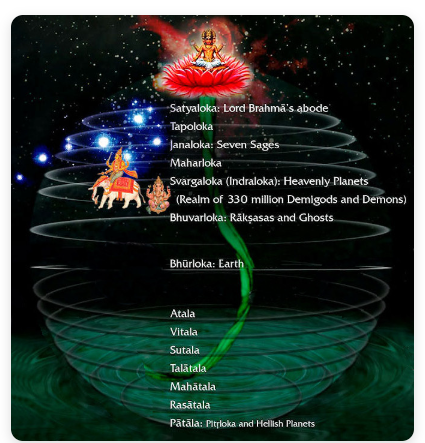
The infallible Supreme Personality of Godhead, Viṣṇu, has descended into this world by His various partial incarnations such as Lord Haṁsa [the swan], Dattātreya, the four Kumāras and our own father, the mighty Ṛṣabhadeva. By such incarnations, the Lord teaches the science of self-realization for the benefit of the whole universe. In His appearance as Hayagrīva He killed the demon Madhu and thus brought the Vedas back from the hellish planet Pātālaloka.