SB 12.6.42
Devanāgarī
तस्य ह्यासंस्त्रयो वर्णा अकाराद्या भृगूद्वह । धार्यन्ते यैस्त्रयो भावा गुणनामार्थवृत्तय: ॥ ४२ ॥
Text
tasya hy āsaṁs trayo varṇā a-kārādyā bhṛgūdvaha dhāryante yais trayo bhāvā guṇa-nāmārtha-vṛttayaḥ
Synonyms
tasya—of thatoṁkāra;hi—indeed;āsan—came into being;trayaḥ—three;varṇāḥ—sounds of the alphabet;a-kāra-ādyāḥ—beginning with the lettera;bhṛgu-udvaha—O most eminent of the descendants of Bhṛgu;dhāryante—are sustained;yaiḥ—by which three sounds;trayaḥ—the threefold;bhāvāḥ—states of existence;guṇa—the qualities of nature;nāma—names;artha—goals;vṛttayaḥ—and states of consciousness.
Translation
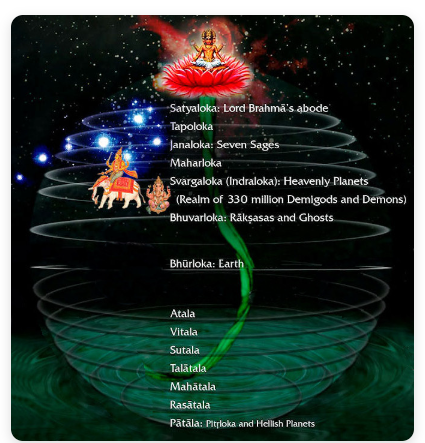
Oṁkāra exhibited the three original sounds of the alphabet — A, U and M. These three, O most eminent descendant of Bhṛgu, sustain all the different threefold aspects of material existence, including the three modes of nature, the names of the Ṛg, Yajur and Sāma Vedas, the goals known as the Bhūr, Bhuvar and Svar planetary systems, and the three functional platforms called waking consciousness, sleep and deep sleep.