SB 2.7.20
Devanāgarī
चक्रं च दिक्ष्वविहतं दशसु स्वतेजो मन्वन्तरेषु मनुवंशधरो बिभर्ति । दुष्टेषु राजसु दमं व्यदधात् स्वकीर्तिं सत्ये त्रिपृष्ठ उशतीं प्रथयंश्चरित्रै: ॥ २० ॥
Text
cakraṁ ca dikṣv avihataṁ daśasu sva-tejo manvantareṣu manu-vaṁśa-dharo bibharti duṣṭeṣu rājasu damaṁ vyadadhāt sva-kīrtiṁ satye tri-pṛṣṭha uśatīṁ prathayaṁś caritraiḥ
Synonyms
cakram—the Sudarśana wheel of the Lord;ca—as well as;dikṣu—in all directions;avihatam—without being deterred;daśasu—ten sides;sva-tejaḥ—personal strength;manvantareṣu—in different incarnations of Manu;manu-vaṁśa-dharaḥ—as the descendant of the Manu dynasty;bibharti—rules over;duṣṭeṣu—unto the miscreants;rājasu—upon the kings of that type;damam—subjection;vyadadhāt—performed;sva-kīrtim—personal glories;satye—in the Satyaloka planet;tri-pṛṣṭhe—the three planetary systems;uśatīm—glorious;prathayan—established;caritraiḥ—characteristics.
Translation
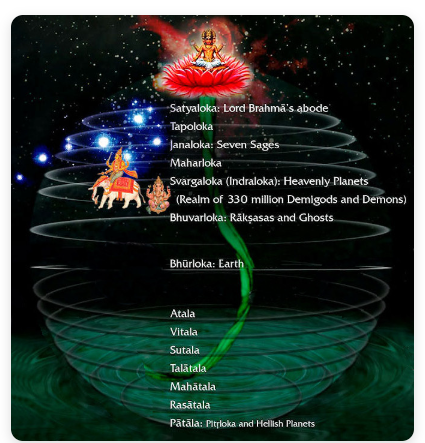
As the incarnation of Manu, the Lord became the descendant of the Manu dynasty and ruled over the miscreant kingly order, subduing them by His powerful wheel weapon. Undeterred in all circumstances, His rule was characterized by His glorious fame, which spread over the three lokas, and above them to the planetary system of Satyaloka, the topmost in the universe.
Purport
The manvantara incarnation chastises all the miscreant rulers of different planets with as much power as that of the Supreme Personality of Godhead, who punishes the miscreants with His wheel weapon. The manvantara incarnations disseminate the transcendental glories of the Lord.