SB 4.31.10
Devanāgarī
किं जन्मभिस्त्रिभिर्वेह शौक्रसावित्रयाज्ञिकै: । कर्मभिर्वा त्रयीप्रोक्तै: पुंसोऽपि विबुधायुषा ॥ १० ॥
Text
kiṁ janmabhis tribhir veha śaukra-sāvitra-yājñikaiḥ karmabhir vā trayī-proktaiḥ puṁso ’pi vibudhāyuṣā
Synonyms
kim—what is the use;janmabhiḥ—of births;tribhiḥ—three;vā—or;iha—in this world;śaukra—by semen;sāvitra—by initiation;yājñikaiḥ—by becoming a perfectbrāhmaṇa;karmabhiḥ—by activities;vā—or;trayī—in theVedas;proktaiḥ—instructed;puṁsaḥ—of a human being;api—even;vibudha—of the demigods;āyuṣā—with a duration of life.
Translation
A civilized human being has three kinds of births. The first birth is by a pure father and mother, and this birth is called birth by semen. The next birth takes place when one is initiated by the spiritual master, and this birth is called sāvitra. The third birth, called yājñika, takes place when one is given the opportunity to worship Lord Viṣṇu. Despite the opportunities for attaining such births, even if one gets the life span of a demigod, if one does not actually engage in the service of the Lord, everything is useless. Similarly, one’s activities may be mundane or spiritual, but they are useless if they are not meant for satisfying the Lord.
Purport
yathā kāñcanatāṁ yāti kāṁsyaṁ rasa-vidhānataḥ tathā dīkṣā-vidhānena dvijatvaṁ jāyate nṛṇām
“As bell metal, when mixed with mercury, is transformed to gold, a person, even though not golden pure, can be transformed into a brāhmaṇa, or dvija, simply by the initiation process.” ( Hari-bhakti-vilāsa 2.12) Thus if one is initiated by a proper person, he can be accepted as twice-born immediately. In our Kṛṣṇa consciousness movement, we therefore offer the student his first initiation and allow him to chant the Hare Kṛṣṇa mahā-mantra. By chanting the Hare Kṛṣṇa mahā-mantra regularly and following the regulative principles, one becomes qualified to be initiated as a brāhmaṇa, because unless one is a qualified brāhmaṇa he cannot be allowed to worship Lord Viṣṇu. This is called yājñika-janma. In our Kṛṣṇa consciousness society, unless one is twice initiated — first by chanting Hare Kṛṣṇa and second by the Gāyatrī mantra — he is not allowed to enter the kitchen or Deity room to execute duties. However, when one is elevated to the platform on which he can worship the Deity, his previous birth does not matter:
caṇḍālo ’pi dvija-śreṣṭho hari-bhakti-parāyaṇaḥ hari-bhakti-vihīnaś ca dvijo ’pi śvapacādhamaḥ
“Even if one is born in the family of a caṇḍāla, if one engages in the devotional service of the Lord, he becomes the best of brāhmaṇas. But even a brāhmaṇa who is devoid of devotional service is on the level of the lowest dog-eater.” If a person is advanced in devotional service, it does not matter whether he was born in a caṇḍāla family. He becomes purified. As Śrī Prahlāda Mahārāja said:
viprād dviṣaḍ-guṇa-yutād aravinda-nābha- pādāravinda-vimukhāc chvapacaṁ variṣṭham
( Bhāg. 7.9.10 )
Even if one is a brāhmaṇa and is qualified with all the brahminical qualifications, he is considered degraded if he is averse to worshiping the Supreme Personality of Godhead. But if a person is attached to the service of the Lord, he becomes glorified even if he is born in a caṇḍāla family. Indeed, such a caṇḍāla can deliver not only himself but all his family predecessors. Without devotional service, even a proud brāhmaṇa cannot deliver himself, and what to speak of his family. In many instances in the śāstras it is seen that even a brāhmaṇa has become a kṣatriya, vaiśya, śūdra, mleccha or non- brāhmaṇa. And there are many instances of one’s being born a kṣatriya or vaiśya or even lower and, in the eighteenth year, attaining elevation to the brahminical platform by the process of initiation. Therefore Nārada Muni says:
yasya yal lakṣaṇaṁ proktaṁ puṁso varṇābhivyañjakam yad anyatrāpi dṛśyeta tat tenaiva vinirdiśet
( Bhāg. 7.11.35 )
It is not a fact that because one is born in a brāhmaṇa family he is automatically a brāhmaṇa. He has a better chance to become a brāhmaṇa, but unless he meets all the brahminical qualifications, he cannot be accepted as such. On the other hand, if the brahminical qualifications are found in the person of a śūdra, he should immediately be accepted as a brāhmaṇa. To substantiate this there are many quotations from Bhāgavatam, Mahābhārata, Bharadvāja-saṁhitā and the Pañcarātra, as well as many other scriptures.
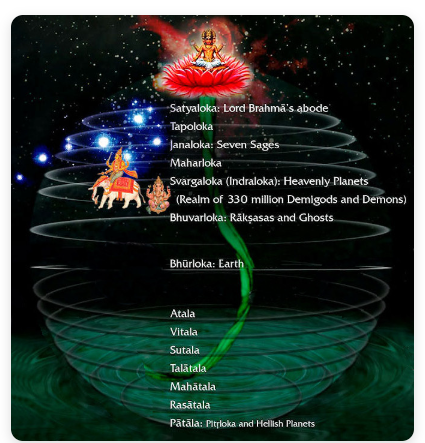
As far as the duration of life of the demigods, concerning Lord Brahmā it is said:
sahasra-yuga-paryantam ahar yad brahmaṇo viduḥ rātriṁ yuga-sahasrāntāṁ te ’ho-rātra-vido janāḥ
( Bg. 8.17 )
The duration of one day of Brahmā is one thousand times greater than the four yugas, aggregating 4,320,000 years, and Brahmā’s night is of the same duration. Brahmā lives for one hundred years of such days and nights. The word vibudhāyuṣā indicates that even if one gets a long life span, his life span is useless if he is not a devotee. A living entity is the eternal servitor of the Supreme Lord, and unless he comes to the platform of devotional service, his life span, good birth, glorious activities and everything else are null and void.