SB 5.20.33
Devanāgarī
यत्तत्कर्ममयं लिङ्गं ब्रह्मलिङ्गं जनोऽर्चयेत् । एकान्तमद्वयं शान्तं तस्मै भगवते नम इति ॥ ३३ ॥
Text
yat tat karmamayaṁ liṅgaṁ brahma-liṅgaṁ jano ’rcayet ekāntam advayaṁ śāntaṁ tasmai bhagavate nama iti
Synonyms
yat—which;tat—that;karma-mayam—obtainable by the Vedic ritualistic system;liṅgam—the form;brahma-liṅgam—which makes known the Supreme Brahman;janaḥ—a person;arcayet—must worship;ekāntam—who has full faith in the one Supreme;advayam—nondifferent;śāntam—peaceful;tasmai—unto him;bhagavate—the most powerful;namaḥ—our respects;iti—thus.
Translation
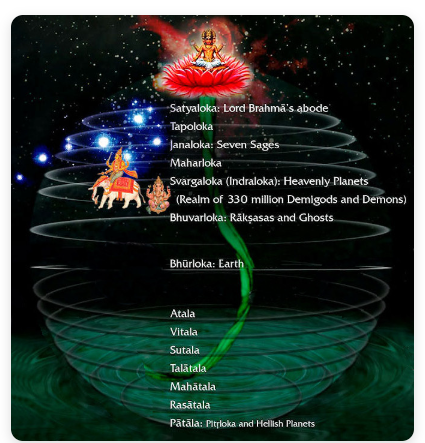
Lord Brahmā is known as karma-maya, the form of ritualistic ceremonies, because by performing ritualistic ceremonies one may attain his position and because the Vedic ritualistic hymns become manifest from him. He is devoted to the Supreme Personality of Godhead without deviation, and therefore in one sense he is not different from the Lord. Nevertheless, he should be worshiped not as the monists worship him, but in duality. One should always remain a servitor of the Supreme Lord, the supreme worshipable Deity. We therefore offer our respectful obeisances unto Lord Brahmā, the form of manifest Vedic knowledge.