SB 6.1.46
Devanāgarī
यथेह देवप्रवरास्त्रैविध्यमुपलभ्यते । भूतेषु गुणवैचित्र्यात्तथान्यत्रानुमीयते ॥ ४६ ॥
Text
yatheha deva-pravarās trai-vidhyam upalabhyate bhūteṣu guṇa-vaicitryāt tathānyatrānumīyate
Synonyms
yathā—just as;iha—in this life;deva-pravarāḥ—O best of the demigods;trai-vidhyam—three kinds of attributes;upalabhyate—are achieved;bhūteṣu—among all living entities;guṇa-vaicitryāt—because of the diversity of the contamination by the three modes of nature;tathā—similarly;anyatra—in other places;anumīyate—it is inferred.
Translation
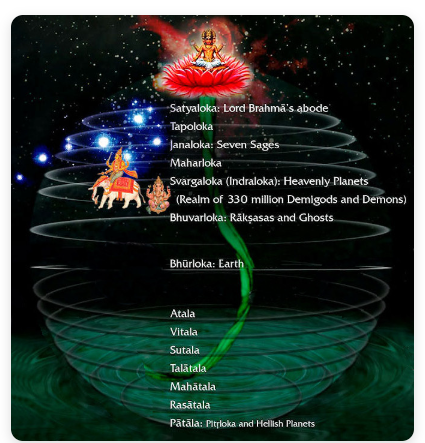
O best of the demigods, we can see three different varieties of life, which are due to the contamination of the three modes of nature. The living entities are thus known as peaceful, restless and foolish; as happy, unhappy or in-between; or as religious, irreligious and semireligious. We can deduce that in the next life these three kinds of material nature will similarly act.
Purport
māṁ ca yo ’vyabhicāreṇa bhakti-yogena sevate sa guṇān samatītyaitān brahma-bhūyāya kalpate
“One who engages in full devotional service, who does not fall down under any circumstance, at once transcends the modes of material nature and thus comes to the spiritual platform.” Unless one is fully absorbed in the service of the Lord, one is subject to the contamination of the three modes of material nature and must therefore suffer from distress or mixed happiness and distress.