SB 6.3.19
Devanāgarī
धर्मं तु साक्षाद्भगवत्प्रणीतं न वै विदुऋर्षयो नापि देवा: । न सिद्धमुख्या असुरा मनुष्या: कुतो नु विद्याधरचारणादय: ॥ १९ ॥
Text
dharmaṁ tu sākṣād bhagavat-praṇītaṁ na vai vidur ṛṣayo nāpi devāḥ na siddha-mukhyā asurā manuṣyāḥ kuto nu vidyādhara-cāraṇādayaḥ
Synonyms
dharmam—real religious principles, or bona fide laws of religion;tu—but;sākṣāt—directly;bhagavat—by the Supreme Personality of Godhead;praṇītam—enacted;na—not;vai—indeed;viduḥ—they know;ṛṣayaḥ—the greatṛṣissuch as Bhṛgu;na—not;api—also;devāḥ—the demigods;na—nor;siddha-mukhyāḥ—the chief leaders of Siddhaloka;asurāḥ—the demons;manuṣyāḥ—the inhabitants of Bhūrloka, the human beings;kutaḥ—where;nu—indeed;vidyādhara—the lesser demigods known as Vidyādharas;cāraṇa—the residents of the planets where people are by nature great musicians and singers;ādayaḥ—and so on.
Translation
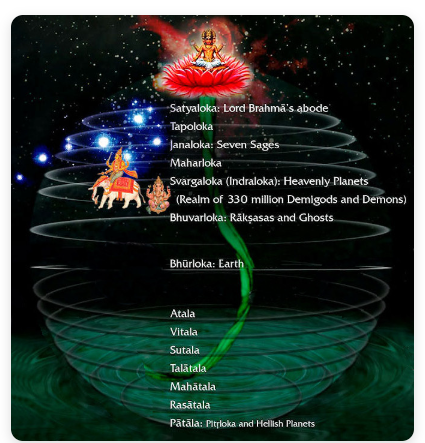
Real religious principles are enacted by the Supreme Personality of Godhead. Although fully situated in the mode of goodness, even the great ṛṣis who occupy the topmost planets cannot ascertain the real religious principles, nor can the demigods or the leaders of Siddhaloka, to say nothing of the asuras, ordinary human beings, Vidyādharas and Cāraṇas.
Purport
Herein it is stated that the real religious principle is that which is given by the Supreme Personality of Godhead. That principle is stated in Bhagavad-gītā. Sarva-dharmān parityajya mām ekaṁ śaraṇaṁ vraja: one should give up all other duties and surrender unto the lotus feet of Kṛṣṇa. That is the real religious principle everyone should follow. Even though one follows Vedic scriptures, one may not know this transcendental principle, for it is not known to everyone. To say nothing of human beings, even the demigods in the upper planetary systems are unaware of it. This transcendental religious principle must be understood from the Supreme Personality of Godhead directly or from His special representative, as stated in the next verses.