SB 7.2.48
Devanāgarī
वितथाभिनिवेशोऽयं यद्गुणेष्वर्थदृग्वच: । यथा मनोरथ: स्वप्न: सर्वमैन्द्रियकं मृषा ॥ ४८ ॥
Text
vitathābhiniveśo ’yaṁ yad guṇeṣv artha-dṛg-vacaḥ yathā manorathaḥ svapnaḥ sarvam aindriyakaṁ mṛṣā
Synonyms
vitatha—fruitless;abhiniveśaḥ—the conception;ayam—this;yat—which;guṇeṣu—in the modes of material nature;artha—as a fact;dṛk-vacaḥ—the seeing and talking of;yathā—just as;manorathaḥ—a mental concoction (daydream);svapnaḥ—a dream;sarvam—everything;aindriyakam—produced by the senses;mṛṣā—false.
Translation
It is fruitless to see and talk of the material modes of nature and their resultant so-called happiness and distress as if they were factual. When the mind wanders during the day and a man begins to think himself extremely important, or when he dreams at night and sees a beautiful woman enjoying with him, these are merely false dreams. Similarly, the happiness and distress caused by the material senses should be understood to be meaningless.
Purport
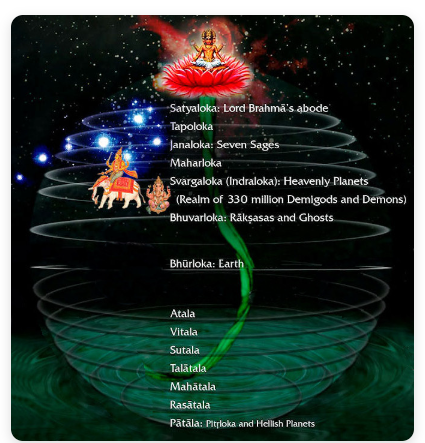
There is a Vedic statement apāma-somam amṛtā abhūma apsarobhir viharāma. With reference to such a conception, one wants to go to the heavenly planets to enjoy with the young girls there and drink soma-rasa. Such imaginary pleasure, however, has no value. As confirmed in Bhagavad-gītā (7.23) , antavat tu phalaṁ teṣāṁ tad bhavaty alpa-medhasām: “Men of small intelligence worship the demigods, and their fruits are limited and temporary.” Even if by fruitive activity or worship of the demigods one is elevated to the higher planetary systems for sense enjoyment, his situation is condemned in Bhagavad-gītā as antavat, perishable. The happiness one enjoys in this way is like the pleasure of embracing a young woman in a dream; for some time it may be pleasing, but actually the basic principle is false. The mental concoctions of happiness and distress in this material world are compared to dreams because of their falseness. All thoughts of obtaining happiness by using the material senses have a false background and therefore have no meaning.