SB 3.18.20
Devanāgarī
दैत्यस्य यज्ञावयवस्य माया- गृहीतवाराहतनोर्महात्मन: । कौरव्य मह्यां द्विषतोर्विमर्दनं दिदृक्षुरागादृषिभिर्वृत: स्वराट् ॥ २० ॥
Text
daityasya yajñāvayavasya māyā- gṛhīta-vārāha-tanor mahātmanaḥ kauravya mahyāṁ dviṣator vimardanaṁ didṛkṣur āgād ṛṣibhir vṛtaḥ svarāṭ
Synonyms
daityasya—of the demon;yajña-avayavasya—of the Personality of Godhead (of whose bodyyajñais a part);māyā—through His potency;gṛhīta—was assumed;vārāha—of a boar;tanoḥ—whose form;mahā-ātmanaḥ—of the Supreme Lord;kauravya—O Vidura (descendant of Kuru);mahyām—for the sake of the world;dviṣatoḥ—of the two enemies;vimardanam—the fight;didṛkṣuḥ—desirous to see;āgāt—came;ṛṣibhiḥ—by the sages;vṛtaḥ—accompanied;svarāṭ—Brahmā.
Translation
O descendant of Kuru, Brahmā, the most independent demigod of the universe, accompanied by his followers, came to see the terrible fight for the sake of the world between the demon and the Personality of Godhead, who appeared in the form of a boar.
Purport
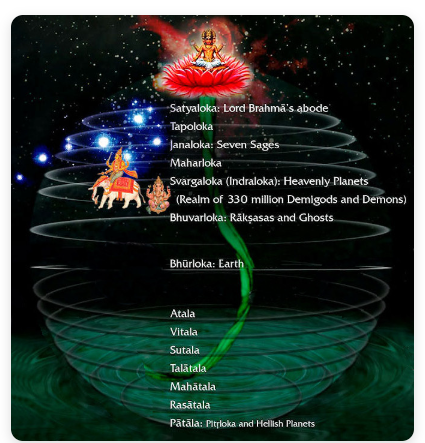
Brahmā is described in this verse as svarāṭ. Actually, full independence is exclusive to the Lord Himself, but as part and parcel of the Supreme Lord, every living entity has a minute quantity of independence. Each and every one of the living entities within this universe has this minute independence, but Brahmā, being the chief of all living entities, has a greater potential of independence than any other. He is the representative of Kṛṣṇa, the Supreme Personality of Godhead, and has been assigned to preside over universal affairs. All other demigods work for him; therefore he is described here as svarāṭ. He is always accompanied by great sages and transcendentalists, all of whom came to see the bullfight between the demon and the Lord.