SB 4.12.29
Devanāgarī
परीत्याभ्यर्च्य धिष्ण्याग्र्यं पार्षदावभिवन्द्य च । इयेष तदधिष्ठातुं बिभ्रद्रूपं हिरण्मयम् ॥ २९ ॥
Text
parītyābhyarcya dhiṣṇyāgryaṁ pārṣadāv abhivandya ca iyeṣa tad adhiṣṭhātuṁ bibhrad rūpaṁ hiraṇmayam
Synonyms
parītya—having circumambulated;abhyarcya—having worshiped;dhiṣṇya-agryam—the transcendental airplane;pārṣadau—unto the two associates;abhivandya—having offered obeisances;ca—also;iyeṣa—he attempted;tat—that plane;adhiṣṭhātum—to board;bibhrat—illuminating;rūpam—his form;hiraṇmayam—golden.
Translation
Before getting aboard, Dhruva Mahārāja worshiped the airplane, circumambulated it, and also offered obeisances to the associates of Viṣṇu. In the meantime he became as brilliant and illuminating as molten gold. He was thus completely prepared to board the transcendental plane.
Purport
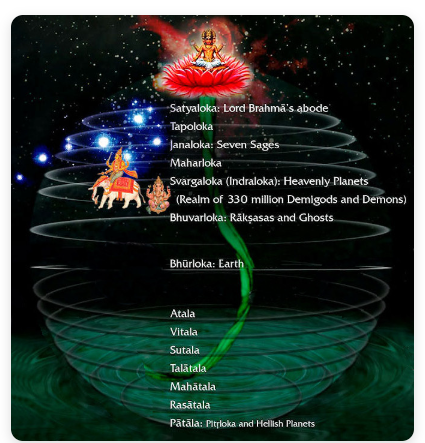
Māyāvādī philosophers cannot imagine how this oneness can be achieved even in different varieties. Their idea of oneness is that there is no variety. Therefore they have become impersonalists. As Śiśumāra, Viṣṇuloka or Dhruvaloka are completely different from this material world, so a Viṣṇu temple within this world is also completely different from this material world. As soon as we are in a temple we should know very well that we are situated differently from the material world. In the temple, Lord Viṣṇu, His throne, His room and all other things associated with the temple are transcendental. The three modes — sattva-guṇa, rajo-guṇa and tamo-guṇa — have no entrance into the temple. It is said, therefore, that to live in the forest is in the mode of goodness, to live in the city is in the mode of passion, and to live in a brothel, liquor shop or slaughterhouse is in the mode of ignorance, but to live in the temple means to live in Vaikuṇṭhaloka. Everything in the temple is as worshipable as Lord Viṣṇu, or Kṛṣṇa.