SB 4.20.28
Devanāgarī
जगज्जनन्यां जगदीश वैशसं स्यादेव यत्कर्मणि न: समीहितम् । करोषि फल्ग्वप्युरु दीनवत्सल: स्व एव धिष्ण्येऽभिरतस्य किं तया ॥ २८ ॥
Text
jagaj-jananyāṁ jagad-īśa vaiśasaṁ syād eva yat-karmaṇi naḥ samīhitam karoṣi phalgv apy uru dīna-vatsalaḥ sva eva dhiṣṇye ’bhiratasya kiṁ tayā
Synonyms
jagat-jananyām—in the mother of the universe (Lakṣmī);jagat-īśa—O Lord of the universe;vaiśasam—anger;syāt—may arise;eva—certainly;yat-karmaṇi—in whose activity;naḥ—my;samīhitam—desire;karoṣi—You consider;phalgu—insignificant service;api—even;uru—very great;dīna-vatsalaḥ—favorably inclined to the poor;sve—own;eva—certainly;dhiṣṇye—in Your opulence;abhiratasya—of one who is fully satisfied;kim—what need is there;tayā—with her.
Translation
My dear Lord of the universe, the goddess of fortune, Lakṣmī, is the mother of the universe, and yet I think that she may be angry with me because of my intruding upon her service and acting on that very platform to which she is so much attached. Yet I am hopeful that even though there is some misunderstanding, You will take my part, for You are very much inclined to the poor, and You always magnify even insignificant service unto You. Therefore even though she becomes angry, I think that there is no harm for You, because You are so self-sufficient that You can do without her.
Purport
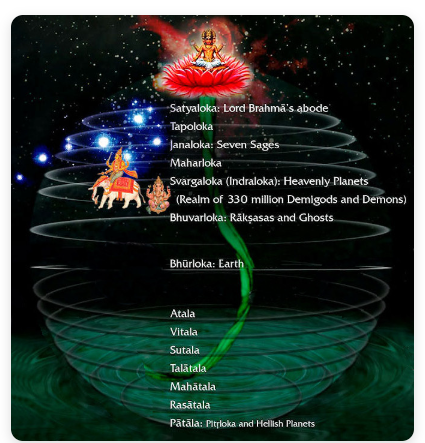
When a person performs Vedic rituals and sacrifices, he does so to elevate himself to the heavenly planets. No one can become qualified to go back home, back to Godhead, by means of such sacrifices. But the Lord is so kind that He accepts a little insignificant service, and therefore it is stated in the Viṣṇu Purāṇa that by following the principles of varṇāśrama-dharma one can satisfy the Supreme Lord. When the Lord is satisfied, the performer of sacrifices is elevated to the platform of devotional service. Pṛthu Mahārāja therefore expected that his insignificant service to the Lord would be accepted by Him as being greater than that of Lakṣmījī. The goddess of fortune is called cañcalā, “restless,” because she is very restless and is always coming and going. So Pṛthu Mahārāja indicated that even though she might go away out of anger, there would be no harm for Lord Viṣṇu, because He is self-sufficient and can do anything and everything without the help of Lakṣmījī. For example, when Garbhodakaśāyī Viṣṇu begot Lord Brahmā from His navel, He did not take any help from Lakṣmī, who was just sitting by Him and massaging His lotus feet. Generally if a son is to be begotten, the husband impregnates the wife, and in due course of time the son is born. But in the case of Lord Brahmā’s birth, Garbhodakaśāyī Viṣṇu did not impregnate Lakṣmījī. Being self-sufficient, the Lord begot Brahmā from His own navel. Therefore, Pṛthu Mahārāja was confident that even if the goddess of fortune became angry with him there would be no harm, neither to the Lord nor to himself.