SB 4.30.44
Devanāgarī
अथ निर्याय सलिलात्प्रचेतस उदन्वत: । वीक्ष्याकुप्यन्द्रुमैश्छन्नां गां गां रोद्धुमिवोच्छ्रितै: ॥ ४४ ॥
Text
atha niryāya salilāt pracetasa udanvataḥ vīkṣyākupyan drumaiś channāṁ gāṁ gāṁ roddhum ivocchritaiḥ
Synonyms
atha—thereafter;niryāya—after coming out;salilāt—from the water;pracetasaḥ—all the Pracetās;udanvataḥ—of the sea;vīkṣya—having observed;akupyan—became very angry;drumaiḥ—by trees;channām—covered;gām—the world;gām—the heavenly planets;roddhum—to obstruct;iva—as if;ucchritaiḥ—very tall.
Translation
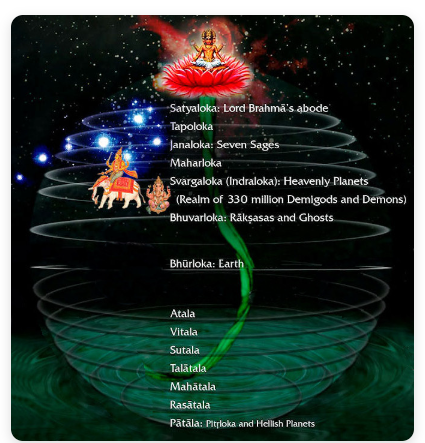
Thereafter all the Pracetās emerged from the waters of the sea. They then saw that all the trees on land had grown very tall, as if to obstruct the path to the heavenly planets. These trees had covered the entire surface of the world. At this time the Pracetās became very angry.
Purport
It is not a fact that jungles and trees attract clouds and rain, because we find rainfall over the sea. Human beings can inhabit any place on the surface of the earth by clearing jungles and converting land for agricultural purposes. People can keep cows, and all economic problems can be solved in that way. One need only work to produce grains and take care of the cows. The wood found in the jungles may be used for constructing cottages. In this way the economic problem of humanity can be solved. At the present moment there are many vacant lands throughout the world, and if they are properly utilized, there will be no scarcity of food. As far as rain is concerned, it is the performance of yajña that attracts rain. As stated in Bhagavad-gītā (3.14) :
annād bhavanti bhūtāni parjanyād anna-sambhavaḥ yajñād bhavati parjanyo yajñaḥ karma-samudbhavaḥ
“All living bodies subsist on food grains, which are produced from rains. Rains are produced by performance of yajña [sacrifice], and yajña is born of prescribed duties.” By performing sacrifice, man will have sufficient rainfall and crops.