SB 5.1.10
Devanāgarī
भगवानपि भारत तदुपनीतार्हण: सूक्तवाकेनातितरामुदितगुणगणावतारसुजय: प्रियव्रतमादि पुरुषस्तं सदयहासावलोक इति होवाच ॥ १० ॥
Text
bhagavān api bhārata tad-upanītārhaṇaḥ sūkta-vākenātitarām udita-guṇa-gaṇāvatāra-sujayaḥ priyavratam ādi-puruṣas taṁ sadaya-hāsāvaloka iti hovāca.
Synonyms
bhagavān—Lord Brahmā;api—moreover;bhārata—O King Parīkṣit;tat—by them;upanīta—brought forward;arhaṇaḥ—worshipable paraphernalia;sūkta—according to Vedic etiquette;vākena—by language;atitarām—highly;udita—praised;guṇa-gaṇa—qualities;avatāra—because of the descent;su-jayaḥ—whose glories;priyavratam—unto Priyavrata;ādi-puruṣaḥ—the original person;tam—unto him;sa-daya—with compassion;hāsa—smiling;avalokaḥ—whose looking;iti—thus;ha—certainly;uvāca—said.
Translation
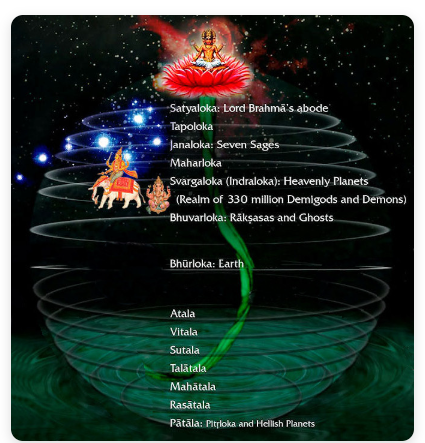
My dear King Parīkṣit, because Lord Brahmā had finally descended from Satyaloka to Bhūloka, Nārada Muni, Prince Priyavrata and Svāyambhuva Manu came forward to offer him objects of worship and to praise him in highly qualified language, according to Vedic etiquette. At that time, Lord Brahmā, the original person of this universe, felt compassion for Priyavrata and, looking upon him with a smiling face, spoke to him as follows.
Purport
Priyavrata was the grandson of Lord Brahmā, and as joking competition sometimes takes place between grandson and grandfather, in this case also Priyavrata was determined to remain in meditation, whereas Brahmā was determined that he rule the universe. Thus Lord Brahmā’s affectionate smile and glance meant, “My dear Priyavrata, you have decided not to accept household life, but I have decided to convince you that you must accept it.” Actually, Brahmā had come to praise Priyavrata for his high standard of renunciation, austerity, penance and devotion so that he would not be deviated from devotional service, even though he would accept household life.
In this verse, one important word is sūkta-vākena (by Vedic hymns). In the Vedas, there is the following prayer to Lord Brahmā: hiraṇyagarbhaḥ samavartatāgre bhūtasya jātaḥ patir eka āsīt. Brahmā was received with the appropriate Vedic hymns, and because he was welcomed according to the Vedic etiquette, he was very pleased.