SB 5.11.5
Devanāgarī
स वासनात्मा विषयोपरक्तोगुणप्रवाहो विकृत: षोडशात्मा । बिभ्रत्पृथङ्नामभि रूपभेद-मन्तर्बहिष्ट्वं च पुरैस्तनोति ॥ ५ ॥
Text
sa vāsanātmā viṣayoparakto guṇa-pravāho vikṛtaḥ ṣoḍaśātmā bibhrat pṛthaṅ-nāmabhi rūpa-bhedam antar-bahiṣṭvaṁ ca purais tanoti
Synonyms
saḥ—that;vāsanā—endowed with many desires;ātmā—the mind;viṣaya-uparaktaḥ—attached to material happiness, sense gratification;guṇa-pravāhaḥ—driven by the force of eithersattva-guṇa, rajo-guṇaortamo-guṇa;vikṛtaḥ—transformed by lust and so on;ṣoḍaśa-ātmā—the chief of the sixteen material elements (the five gross elements, the ten senses and the mind);bibhrat—wandering;pṛthak-nāmabhiḥ—with separate names;rūpa-bhedam—assuming different forms;antaḥ-bahiṣṭvam—the quality of being first-class or last-class;ca—and;puraiḥ—with different bodily forms;tanoti—manifests.
Translation
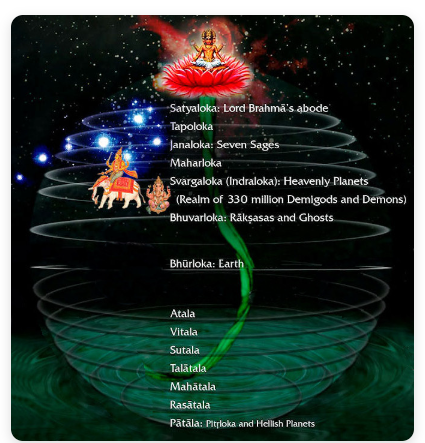
Because the mind is absorbed in desires for pious and impious activities, it is naturally subjected to the transformations of lust and anger. In this way, it becomes attracted to material sense enjoyment. In other words, the mind is conducted by the modes of goodness, passion and ignorance. There are eleven senses and five material elements, and out of these sixteen items, the mind is the chief. Therefore the mind brings about birth in different types of bodies among demigods, human beings, animals and birds. When the mind is situated in a higher or lower position, it accepts a higher or lower material body.
Purport
prakṛteḥ kriyamāṇāni guṇaiḥ karmāṇi sarvaśaḥ ahaṅkāra-vimūḍhātmā kartāham iti manyate
“The bewildered spirit soul, under the influence of the three modes of material nature, thinks himself the doer of activities, which are in actuality carried out by nature.”
Material existence means being fully controlled by material nature. The mind is the center for accepting the dictations of material nature. In this way the living entity is carried away in different types of bodies continuously, millennium after millennium.
kṛṣṇa bhuli’ sei jīva anādi-bahirmukha ataeva māyā tāre deya saṁsāra-duḥkha
( Caitanya-caritāmṛta, Madhya 20.117 )
Due to the living entity’s forgetfulness of Kṛṣṇa, one is bound by the laws of material nature.