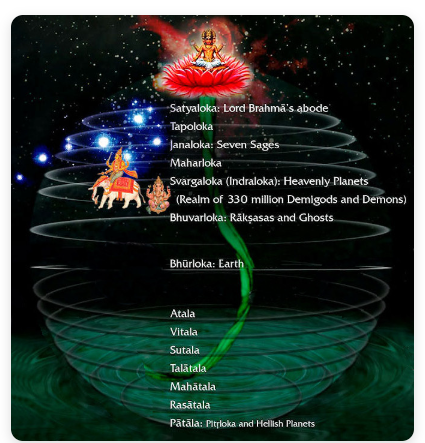
SB 5.8.26
Devanāgarī
एवमघटमानमनोरथाकुलहृदयो मृगदारकाभासेन स्वारब्धकर्मणा योगारम्भणतो विभ्रंशित: स योगतापसो भगवदाराधनलक्षणाच्च कथमितरथा जात्यन्तर एणकुणक आसङ्ग: साक्षान्नि:श्रेयसप्रतिपक्षतया प्राक्परित्यक्तदुस्त्यजहृदयाभिजातस्य तस्यैवमन्तरायविहत योगारम्भणस्य राजर्षेर्भरतस्य तावन्मृगार्भकपोषणपालनप्रीणनलालनानुषङ्गेणाविगणयत आत्मानमहिरिवाखुबिलं दुरतिक्रम: काल: करालरभस आपद्यत ॥ २६ ॥
Text
evam aghaṭamāna-manorathākula-hṛdayo mṛga-dārakābhāsena svārabdha-karmaṇā yogārambhaṇato vibhraṁśitaḥ sa yoga-tāpaso bhagavad-ārādhana-lakṣaṇāc ca katham itarathā jāty-antara eṇa-kuṇaka āsaṅgaḥ sākṣān niḥśreyasa-pratipakṣatayā prāk-parityakta-dustyaja-hṛdayābhijātasya tasyaivam antarāya-vihata-yogārambhaṇasya rājarṣer bharatasya tāvan mṛgārbhaka-poṣaṇa-pālana-prīṇana-lālanānuṣaṅgeṇāvigaṇayata ātmānam ahir ivākhu-bilaṁ duratikramaḥ kālaḥ karāla-rabhasa āpadyata.
Synonyms
evam—in that way;aghaṭamāna—impossible to be achieved;manaḥ-ratha—by desires, which are like mental chariots;ākula—aggrieved;hṛdayaḥ—whose heart;mṛga-dāraka-ābhāsena—resembling the son of a deer;sva-ārabdha-karmaṇā—by the bad results of his unseen fruitive actions;yoga-ārambhaṇataḥ—from the activities ofyogaperformances;vibhraṁśitaḥ—fallen down;saḥ—he (Mahārāja Bharata);yoga-tāpasaḥ—executing the activities of mysticyogaand austerities;bhagavat-ārādhana-lakṣaṇāt—from the activities of devotional service rendered to the Supreme Personality of Godhead;ca—and;katham—how;itarathā—else;jāti-antare—belonging to a different species of life;eṇa-kuṇake—to the body of a deer calf;āsaṅgaḥ—so much affectionate attachment;sākṣāt—directly;niḥśreyasa—to achieve the ultimate goal of life;pratipakṣatayā—with the quality of being an obstacle;prāk—who previously;parityakta—given up;dustyaja—although very difficult to give up;hṛdaya-abhijātasya—his sons, born of his own heart;tasya—of him;evam—thus;antarāya—by that obstacle;vihata—obstructed;yoga-ārambhaṇasya—whose path of executing the mysticyogapractices;rāja-ṛṣeḥ—of the great saintly King;bharatasya—of Mahārāja Bharata;tāvat—in that way;mṛga-arbhaka—the son of a deer;poṣaṇa—in maintaining;pālana—in protecting;prīṇana—in making happy;lālana—in fondling;anuṣaṅgeṇa—by constant absorption;avigaṇayataḥ—neglecting;ātmānam—his own soul;ahiḥiva—like a serpent;ākhu-bilam—the hole of a mouse;duratikramaḥ—unsurpassable;kālaḥ—ultimate death;karāla—terrible;rabhasaḥ—having speed;āpadyata—arrived.
Translation
Śukadeva Gosvāmī continued: My dear King, in this way Bharata Mahārāja was overwhelmed by an uncontrollable desire which was manifest in the form of the deer. Due to the fruitive results of his past deeds, he fell down from mystic yoga, austerity and worship of the Supreme Personality of Godhead. If it were not due to his past fruitive activity, how could he have been attracted to the deer after giving up the association of his own son and family, considering them stumbling blocks on the path of spiritual life? How could he show such uncontrollable affection for a deer? This was definitely due to his past karma. The King was so engrossed in petting and maintaining the deer that he fell down from his spiritual activities. In due course of time, insurmountable death, which is compared to a venomous snake that enters the hole created by a mouse, situated itself before him.