SB 6.1.51
Devanāgarī
तदेतत्षोडशकलं लिङ्गं शक्तित्रयं महत् । धत्तेऽनुसंसृतिं पुंसि हर्षशोकभयार्तिदाम् ॥ ५१ ॥
Text
tad etat ṣoḍaśa-kalaṁ liṅgaṁ śakti-trayaṁ mahat dhatte ’nusaṁsṛtiṁ puṁsi harṣa-śoka-bhayārtidām
Synonyms
tat—therefore;etat—this;ṣoḍaśa-kalam—made of sixteen parts (namely the ten senses, the mind and the five sense objects);liṅgam—the subtle body;śakti-trayam—the effect of the three modes of material nature;mahat—insurmountable;dhatte—gives;anusaṁsṛtim—almost perpetual rotation and transmigration in different types of bodies;puṁsi—unto the living entity;harṣa—jubilation;śoka—lamentation;bhaya—fear;ārti—misery;dām—which gives.
Translation
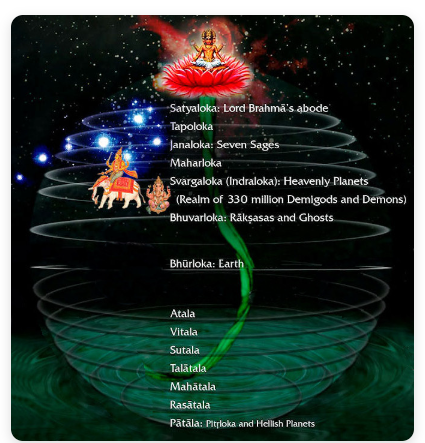
The subtle body is endowed with sixteen parts — the five knowledge-acquiring senses, the five working senses, the five objects of sense gratification, and the mind. This subtle body is an effect of the three modes of material nature. It is composed of insurmountably strong desires, and therefore it causes the living entity to transmigrate from one body to another in human life, animal life and life as a demigod. When the living entity gets the body of a demigod, he is certainly very jubilant, when he gets a human body he is always in lamentation, and when he gets the body of an animal, he is always afraid. In all conditions, however, he is actually miserable. His miserable condition is called saṁsṛti, or transmigration in material life.