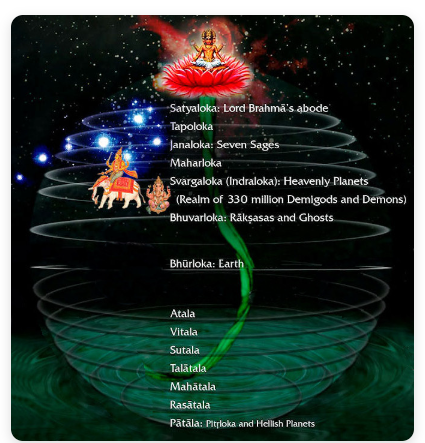
SB 6.5.11
Devanāgarī
भू: क्षेत्रं जीवसंज्ञं यदनादि निजबन्धनम् । अदृष्ट्वा तस्य निर्वाणं किमसत्कर्मभिर्भवेत् ॥ ११ ॥
Text
bhūḥ kṣetraṁ jīva-saṁjñaṁ yad anādi nija-bandhanam adṛṣṭvā tasya nirvāṇaṁ kim asat-karmabhir bhavet
Synonyms
bhūḥ—the earth;kṣetram—the field of activities;jīva-saṁjñam—the designation of the spiritual living being who is bound by different results of activity;yat—which;anādi—existing since time immemorial;nija-bandhanam—causing his own bondage;adṛṣṭvā—without seeing;tasya—of this;nirvāṇam—the cessation;kim—what benefit;asat-karmabhiḥ—with temporary fruitive activities;bhavet—there can be.
Translation
[The Haryaśvas understood the meaning of Nārada’s words as follows.] The word “bhūḥ” [“the earth”] refers to the field of activities. The material body, which is a result of the living being’s actions, is his field of activities, and it gives him false designations. Since time immemorial, he has received various types of material bodies, which are the roots of bondage to the material world. If one foolishly engages in temporary fruitive activities and does not look toward the cessation of this bondage, what will be the benefit of his actions?
Purport
The Haryaśvas, the sons of Prajāpati Dakṣa, could immediately understand the purport of Nārada’s instructions. Our Kṛṣṇa consciousness movement is especially meant for such enlightenment. We are trying to enlighten humanity so that people may come to the understanding that they should work hard in tapasya for self-realization and freedom from the continuous bondage of birth, death, old age and disease in one body after another. Māyā, however, is very strong; she is expert in putting impediments in the way of this understanding. Therefore sometimes one comes to the Kṛṣṇa consciousness movement but again falls into the clutches of māyā, not understanding the importance of this movement.