SB 11.20.13
Devanāgarī
न नर: स्वर्गतिं काङ्क्षेन्नारकीं वा विचक्षण: । नेमं लोकं च काङ्क्षेत देहावेशात् प्रमाद्यति ॥ १३ ॥
Text
na naraḥ svar-gatiṁ kāṅkṣen nārakīṁ vā vicakṣaṇaḥ nemaṁ lokaṁ ca kāṅkṣeta dehāveśāt pramādyati
Synonyms
na—never;naraḥ—a human being;svaḥ-gatim—promotion to heaven;kāṅkṣet—should desire;nārakīm—to hell;vā—or;vicakṣaṇaḥ—a learned person;na—nor;imam—this;lokam—earth planet;ca—also;kāṅkṣeta—one should desire;deha—in the material body;āveśāt—from absorption;pramādyati—one becomes a fool.
Translation
A human being who is wise should never desire promotion to heavenly planets or residence in hell. Indeed, a human being should also never desire permanent residence on the earth, for by such absorption in the material body one becomes foolishly negligent of one’s actual self-interest.
Purport
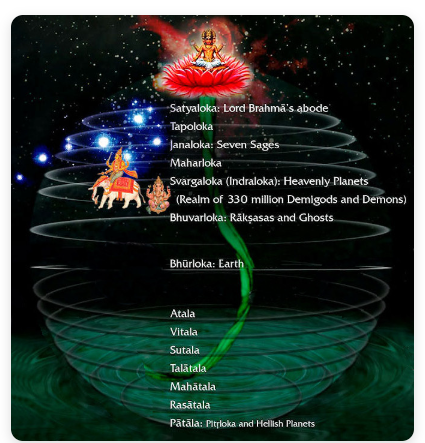
Lord Kṛṣṇa now begins to develop His conclusive proof that actual human progress lies beyond material piety and sin. The Lord first clarified that there are basically three methods of human elevation, namely jñāna, karma and bhakti, and that the goal is transcendental knowledge and ultimately love of Godhead. Now the Lord explains that promotion to heavenly planets (the final goal of piety) as well as residence in hell (the result of sinful activities) are both useless in fulfilling the actual purpose of life. Neither material piety nor sin establish the eternal living entity in his constitutional position; therefore something more is required to achieve the actual perfection of life.