SB 4.26.24
Devanāgarī
तस्मिन्दधे दममहं तव वीरपत्नि योऽन्यत्र भूसुरकुलात्कृतकिल्बिषस्तम् । पश्ये न वीतभयमुन्मुदितं त्रिलोक्या- मन्यत्र वै मुररिपोरितरत्र दासात् ॥ २४ ॥
Text
tasmin dadhe damam ahaṁ tava vīra-patni yo ’nyatra bhūsura-kulāt kṛta-kilbiṣas tam paśye na vīta-bhayam unmuditaṁ tri-lokyām anyatra vai mura-ripor itaratra dāsāt
Synonyms
tasmin—unto him;dadhe—shall give;damam—punishment;aham—I;tava—to you;vīra-patni—O wife of the hero;yaḥ—one who;anyatra—besides;bhū-sura-kulāt—from the group of demigods on this earth (thebrāhmaṇas);kṛta—done;kilbiṣaḥ—offense;tam—him;paśye—I see;na—not;vīta—without;bhayam—fear;unmuditam—without anxiety;tri-lokyām—within the three worlds;anyatra—elsewhere;vai—certainly;mura-ripoḥ—of the enemy of Mura (Kṛṣṇa);itaratra—on the other hand;dāsāt—than the servant.
Translation
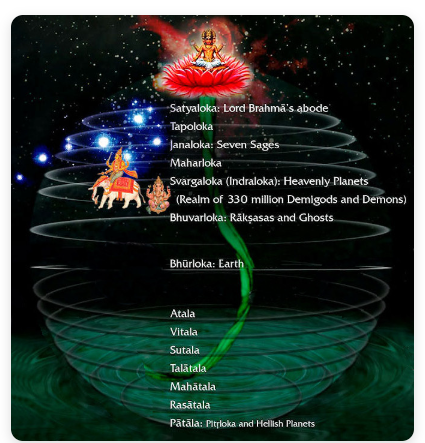
O hero’s wife, kindly tell me if someone has offended you. I am prepared to give such a person punishment as long as he does not belong to the brāhmaṇa caste. But for the servant of Muraripu [Kṛṣṇa], I excuse no one within or beyond these three worlds. No one can freely move after offending you, for I am prepared to punish him.
Purport
One’s pure intelligence, or pure Kṛṣṇa consciousness, becomes polluted by material activities. Pure consciousness can be revived by the process of sacrifice, charity, pious activities, etc., but when one pollutes his Kṛṣṇa consciousness by offending a brāhmaṇa or a Vaiṣṇava, it is very difficult to revive. Śrī Caitanya Mahāprabhu has described the vaiṣṇava-aparādha, or offense to a Vaiṣṇava, as “the mad elephant offense.” One should be very careful not to offend a Vaiṣṇava or a brāhmaṇa. Even the great yogī Durvāsā was harassed by the Sudarśana cakra when he offended the Vaiṣṇava Mahārāja Ambarīṣa, who was neither a brāhmaṇa nor a sannyāsī but an ordinary householder. Mahārāja Ambarīṣa was a Vaiṣṇava, and consequently Durvāsā Muni was chastised.
The conclusion is that if Kṛṣṇa consciousness is covered by material sins, one can eliminate the sins simply by chanting the Hare Kṛṣṇa mantra, but if one pollutes his Kṛṣṇa consciousness by offending a brāhmaṇa or a Vaiṣṇava, one cannot revive it until one properly atones for the sin by pleasing the offended Vaiṣṇava or brāhmaṇa. This was the course that Durvāsā Muni had to follow, for he surrendered unto Mahārāja Ambarīṣa. A vaiṣṇava-aparādha cannot be atoned for by any means other than by begging the pardon of the offended Vaiṣṇava.